
Key takeaway
Living abroad can expand a woman's freedom and confidence, but it can also disrupt career, identity, safety, relationships, and belonging. The impact depends greatly on why she moved, how much independence she retains, and what support surrounds her. Some women arrive alone and thrive. Others follow a partner and slowly lose their own outline, the territory covered in the trailing spouse and expat partner experience . Many need expat mental health support long before they think to ask.
She has the visa, the apartment, the city everyone photographs. At dinner parties she is introduced as someone's wife. She used to run a team of twelve. Now she runs household admin in a language she is still learning, unsure whether she is ungrateful or quietly disappearing.
What Is Life Abroad Really Like for Women?
Life abroad often gives women more freedom, confidence, and professional range than they had at home, while creating pressures that are specifically gendered. The same move can deliver independence and vulnerability at once. What tips the balance is rarely the country itself, but money, status, visa terms, and whether she has people of her own.
Women are not a niche within migration. According to UN DESA's International Migrant Stock 2024, roughly 146 million international migrants are women, about 48 percent of the global total, and in Europe women are the majority at 52 percent.
"Expat woman" therefore covers wildly different lives, shaped by whether you moved alone or partnered, your financial independence, age, family situation, race, nationality, religion, sexuality, disability, host-country norms, and visa status.
Moving abroad does not simply change where a woman lives. It can change how much freedom, power, confidence, and support she has in everyday life.
Moving Abroad Alone as a Woman
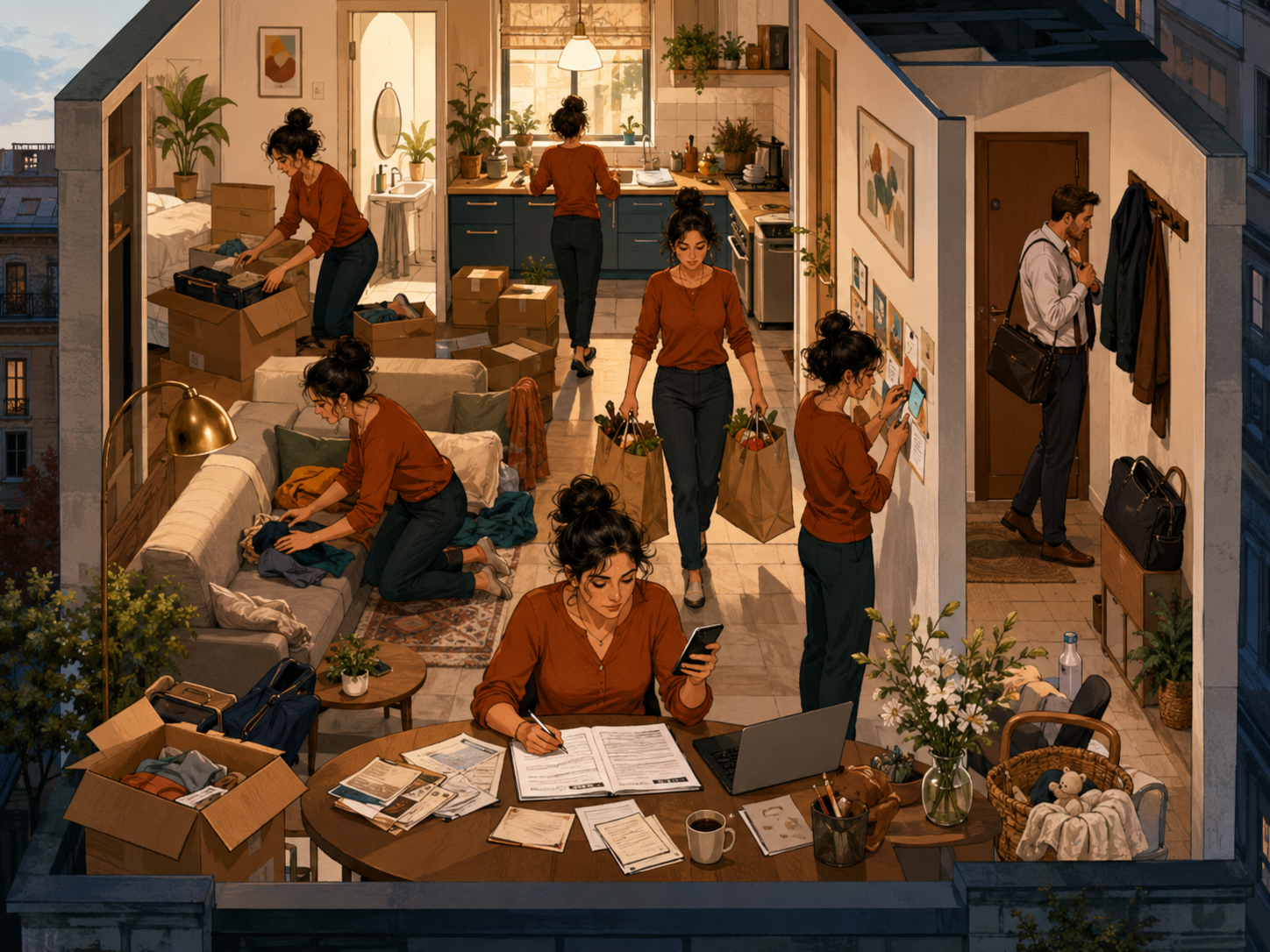
Moving abroad alone as a woman is one of the fastest routes to self-knowledge available. You solve problems in a second language, build a life from nothing, and discover you are more capable than you were told. It is also tiring in a way that is hard to explain, because freedom and vigilance arrive together.
The cost is cognitive load. Housing viewings, late transport, dating, solo travel: each carries a risk calculation many men do not run as often. Do that daily for years and it becomes background exhaustion. Being free is not the same as being held.
None of this argues against going, only for going prepared:
- Research neighbourhoods and transport before you sign anything
- Build local emergency contacts, not just friends back home
- Trust discomfort instead of talking yourself out of it
- Join recurring groups rather than relying on apps for connection
- Keep control of your money, documents, and housing decisions
Career Loss, Underemployment, and Financial Dependence
Career damage is the most common and least discussed cost of relocation for women. Qualifications stop being recognised, visas restrict what you may accept, networks evaporate, and the job you can get sits well below the job you had. Working abroad as a woman often means rebuilding professional credibility from zero.
The data is stark. The Permits Foundation 2022 partner survey found that 90 percent of accompanying partners were employed before relocation, but fewer than half were employed afterwards, citing work authorisation, language, and unrecognised qualifications. Women remain the large majority of accompanying partners.
That drop rarely stays professional. It becomes unpaid caregiving, lost pension contributions, and eventually financial dependence on a partner you never planned to depend on. These female expatriate challenges are structural, not personal failure. The trailing spouse and expat partner experience goes deeper.
A move can improve the household's future while quietly shrinking one woman's independence. Both truths can exist at the same time.

Practical protection for a career abroad for women:
- Agree on personal financial access before relocating
- Keep professional profiles and networks active during any gap
- Check local credential recognition early, not after arrival
- Protect time for language learning or retraining
- Treat unpaid relocation labour as work, because it is
- Set a date to review the career sacrifice, so it does not become permanent by default
When You Become "The Expat Wife"
Becoming known mainly as someone's partner is a specific kind of erosion. Introductions start with his job. Your work and history become optional context. Meanwhile you run the invisible infrastructure of the move, schools, doctors, paperwork, and notice that competence at logistics is not the same as being seen.
Resentment usually arrives, then guilt about it, because the move may genuinely be good for the family. Being an expat wife is not automatically a diminished life, and many women build autonomous lives while partnered. The line worth watching is between supporting a partner and disappearing into their life.
How Moving Abroad Can Change a Woman's Identity
Relocation reliably changes how women see themselves, and not always in one direction. You may feel freer in one culture and more constrained in another. You may notice you are funnier, blunter, or smaller depending which language you are speaking. Over time, home-country and host-country expectations start to argue inside you.
That argument lands on the big questions: how much you want to work, what marriage should look like, whether motherhood is the plan. Some women find old beliefs confirmed, others quietly revise them. The goal is becoming bicultural without erasing the original. If home has become unclear, expat identity crisis and belonging abroad explores it further.
The woman who moved abroad may not be the same woman who eventually feels at home there. That change is not necessarily a loss.
Loneliness, Friendship, and Community
Female expat loneliness often hides behind a busy calendar. You can have brunches, school-gate chats, and a full group thread while nobody knows your history. Loneliness abroad is usually about depth, not volume. Expat friendships also keep leaving, because everyone is temporary.
Several patterns make it harder. Friendships form through partners or children rather than through you. Warmth does not always mean closeness, since norms around emotional openness differ. Friendships at home thin across time zones, and remote work or maternity leave can shrink your world. See loneliness while living abroad and making friends abroad as an expat.
What actually helps:
- Choose recurring activities over one-off events, since repetition builds intimacy
- Deepen one friendship deliberately instead of widening the circle
- Mix local and international circles so your life is not purely transient
- Stop waiting to be invited
- Build at least one relationship that has nothing to do with your partner
Safety, Harassment, and Discrimination Abroad
Many women abroad face harassment or discrimination without knowing where to report it. That can mean street harassment, workplace sexism, racial or nationality-based prejudice, accent bias, or sexual harassment. The added difficulty abroad is that you may not know your rights, your recourse, or who will believe you.
Visa and employment dependence makes this heavier: if your right to stay is tied to a job or a marriage, reporting can feel like risking everything. Cultural adjustment also gets weaponised, sometimes by you. There is a real difference between respecting local norms and accepting mistreatment because you are the foreigner. If prejudice is affecting your wellbeing, discrimination and mental health covers it.
Adapting to another culture should not require accepting harassment, prejudice, or the loss of personal safety.
Expat Motherhood Without the Village
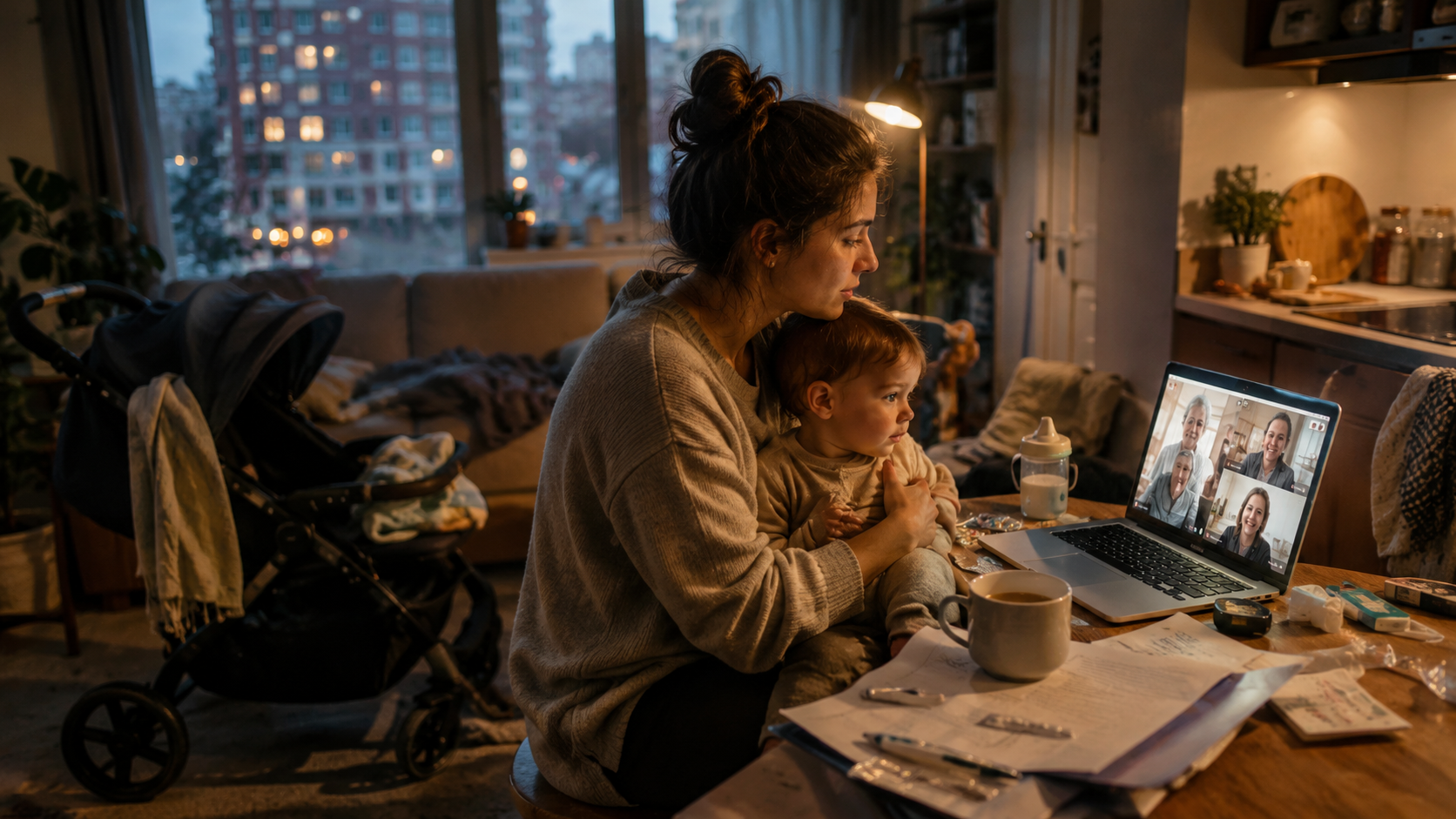
Mothering abroad means doing it without the infrastructure you assumed. Pregnancy and birth happen inside an unfamiliar medical system, in a second language, with nobody's grandmother down the road. The missing village is not sentimental, it is logistical, and its absence shows up in cost, exhaustion, and isolation.
The load stacks fast: childcare costs, language barriers with schools and doctors, and the unspoken job of managing the family's cultural adaptation. Many expat mothers also carry guilt about their children's identity, and maternity leave abroad can be the loneliest stretch.
Global patterns bite here. ILO estimates published in October 2024 found 708 million women worldwide are outside the labour force because of unpaid care responsibilities, with 45 percent of women outside the labour force citing care as the reason, against 5 percent of men. Relocation sharpens that imbalance. If caregiving is straining everyone, family therapy for expats helps you renegotiate it rather than absorb it.
Relationships, Dating, and Cultural Expectations
Relocation reshapes relationships fast. Dating means reading unfamiliar signals, cross-cultural partnerships mean negotiating two sets of assumptions, and couples who moved for one person's job carry an imbalance in sacrifice that rarely stays quiet. Power shifts when one partner controls the income, the language, or the visa status.
Add differing pressure around marriage and gender roles, plus partners adapting at different speeds, and strain becomes predictable. The deeper version is in how moving abroad changes expat relationships.
How Women Can Rebuild Independence and Belonging Abroad
Rebuilding independence abroad is less about one dramatic decision than reclaiming small pieces of agency: money, language, friendships, and time that belong to you. Start with whichever item below you have quietly given up, and treat it as maintenance rather than rebellion.
- Keep access to your own money. Separate account, your name, no permission needed.
- Build an identity outside your partner or family. One thing entirely yours.
- Protect your professional life. Keep skills warm without a job title.
- Learn enough language to regain agency. Fluency is optional, autonomy is not.
- Create a support circle that belongs to you. Not shared, not inherited.
- Know your rights and local support options before you need them.
- Schedule check-ins on whether the move still works for you.
- Ask for help before resentment becomes your normal. Early is easier.
- Allow your goals to change. The plan you arrived with may expire.
- Seek support when you no longer feel like yourself. That is a reason, not an overreaction.
Self-care abroad covers the practical version of this rather than the performative one. When the load is heavier than habits can carry, online therapy for expats is the more honest next step.
Independence abroad is not only about earning money. It is having choices, relationships, confidence, and a life that still feels like your own.
When Therapy Can Help Women Living Abroad
Therapy helps most when the difficulty is not a problem to solve but a life to renegotiate. For women abroad that often means career grief, loneliness, relationship resentment, or a slow loss of confidence no productivity system will fix. Working in your native language matters here, because nuance is where this work happens.
It also helps with identity change, discrimination, hypervigilance, motherhood without support, guilt about family at home, and the question many women carry silently: whether to stay or go home. Therapy is not the only answer, since money, community, and a fairer division of labour do enormous work. But if you no longer recognise yourself, it is worth talking through.
Feeling as though the move changed your role, confidence, or independence more than you expected? Expathy connects you with a licensed psychologist who understands expat life and can support you in your native language. Find your therapist.
Frequently Asked Questions
What is an expat woman?
An expat woman is any woman living outside her home country, whether she moved for her own career, to study, with a partner, after marriage or divorce, or alone. The term spans independent professionals, accompanying partners, and international students.
What challenges do women face when living abroad?
The most common are career interruption, financial dependence, loneliness, safety concerns, harassment or discrimination, loss of identity, caregiving without family nearby, and relationship strain. The mix depends heavily on visa status, income, and support.
Is moving abroad alone as a woman safe?
Millions of women live abroad independently and safely, though safety varies by country, city, and neighbourhood. Research transport and housing, build local emergency contacts, and trust your instincts. Preparation matters more than avoidance.
Why do expat women experience career setbacks?
Because the barriers are structural: work authorisation rules, unrecognised qualifications, language requirements, and lost networks. The Permits Foundation 2022 partner survey found employment among accompanying partners fell from 90 percent before relocation to under half afterwards, and most accompanying partners are women.
How can a woman maintain financial independence abroad?
Keep an account in your own name with independent access, agree financial arrangements before relocating, maintain professional networks during any career gap, and treat unpaid caregiving as real economic contribution.
What is it like to be an expat wife?
It varies enormously. Some women find space, freedom, and new direction. Others are introduced through their partner's job, manage invisible household work, and lose professional status. The difficulty is less the role than whether her own life stays visible.
Why do female expats feel lonely?
Because expat social life is often wide but shallow. Friendships are temporary, form through partners or children, and cross differing norms of emotional openness, while friendships at home fade. It is about depth, not company.
How can expat mothers cope without family nearby?
Practical substitutes for the missing village help most: paid or shared childcare, local parent groups meeting regularly, and honest renegotiation of caregiving with a partner. ILO estimates from October 2024 show 708 million women are outside the labour force due to unpaid care.
How does moving abroad affect women's mental health?
It can improve wellbeing through independence and growth, or strain it through isolation, career loss, discrimination, and vigilance. Difficulty often appears gradually as low mood, anxiety, exhaustion, or not recognising yourself. Persistent symptoms deserve professional attention.
When should a woman living abroad seek professional support?
Consider support when low mood, anxiety, or exhaustion lasts weeks, when resentment or loneliness feels permanent, when confidence has collapsed, when harassment is affecting daily life, or when you cannot tell whether staying is right.
Need support? We're here.
Book a free 15-min consultation with our expat-specialized therapists.